
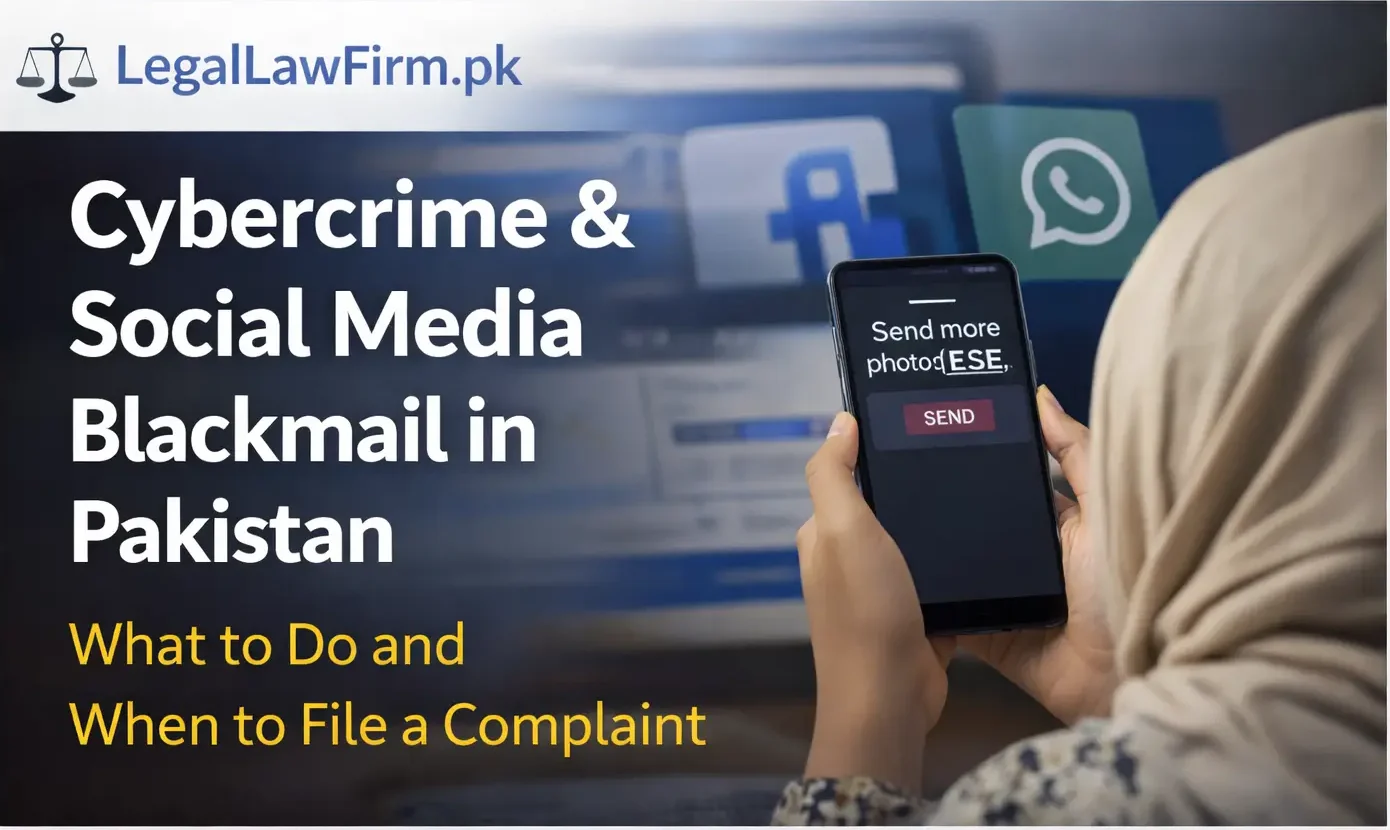
In Pakistan, most of our daily life runs through WhatsApp, Facebook, Instagram, TikTok and other apps. With this, one problem is becoming very common:
Online blackmail and harassment.
Someone might threaten to leak your photos, use your old chats, or create fake profiles to damage your name. Many people feel scared and confused about what to do.
This guide explains, in simple language:
- What counts as cybercrime and online blackmail
Which legal options you have in Pakistan - How you can file a complaint and when to speak to a lawyer
This is general information only. For any serious situation, always get personal legal advice.
What Does Cybercrime and Online Blackmail Look Like?
Cybercrime is any crime that involves a phone, computer or the internet.
For normal users in Pakistan, it usually appears like this:
- Someone threatens to share private photos or videos
- Fake accounts are made in your name to defame or cheat others
- Your WhatsApp, Facebook or email is hacked
- Personal pictures or chats are shared without your consent
- You receive continuous abusive or threatening messages
- You are tricked into sending money through fake links or offers
If a person uses any digital platform to control, threaten, insult or cheat you, there is a high chance that it falls under Pakistan’s cybercrime laws.
The Law in Simple Words
Pakistan’s main law on cyber offences is the Prevention of Electronic Crimes Act (PECA).
In plain language, PECA covers:
- Hacking or accessing someone’s account without permission
- Sharing intimate images or videos without consent
- Online harassment, stalking and blackmail
- Fraud, fake investment schemes and phishing
- Identity theft and fake profiles
Punishment can include fine, imprisonment, or both, depending on the nature of the act.
You do not need to know section numbers. What matters is:
If you are being blackmailed or harassed online, you have the right to complain and seek protection.
First Steps If You Are Being Blackmailed Online
When people panic, they often make mistakes: they delete chats, pay money, or argue in anger. Try not to do that.
Here are some basic steps that usually help:
1. Save and back up evidence
- Take screenshots of messages, profiles and posts
- Save voice notes, call logs and emails
- Do not delete chats unless a lawyer advises you to
2. Do not send more data or money
- Do not send more pictures “to calm things down”
- Do not make payments just to “close the matter” – it often continues
3. Avoid emotional replies
- Do not abuse back
- Try to keep your replies limited and neutral, or stop replying at all
4. Talk to someone you trust
- A family member, friend or professional can help you think clearly
- If things look serious, speak to a lawyer early
How to File a Cybercrime Complaint in Pakistan
Most cybercrime cases are handled by the FIA’s cyber crime wing.
You can usually:
- File a complaint online
- Call the FIA helpline
- Visit a local cyber crime office, if available in your city
Information that helps your complaint
Try to organise:
- Your full name, CNIC and contact details
- Screenshots of threats, chats, posts and fake profiles
- Links to the accounts involved
- Records of any payments made (Easypaisa, JazzCash, bank transfer, etc.)
- Approximate dates and times of the incidents
A clear, organised complaint makes it easier for authorities to understand your case.
Going Alone vs Going Through a Lawyer
You are allowed to file a cybercrime complaint on your own. Many people do that.
However, a lawyer can be helpful when:
- The case is sensitive (intimate photos, family reputation)
- You feel pressure or fear and are unsure what to say
- You expect a long investigation or possible trial
- You need guidance on what to show and what not to share publicly
A lawyer can help you:
- Draft a clear written complaint
- Explain which laws apply
- Guide you during FIA questioning and statements
Represent you in court, if the matter goes that far
How Legal Law Firm Supports Cybercrime Victims
At Legal Law Firm, Lahore, we regularly deal with:
- Social media blackmail and threats
- Fake profiles and character attacks
- Harassment through calls, messages and apps
- Cyber fraud and misuse of personal data
Our role is to:
- Explain your legal options in simple language
- Help you decide whether to complain to FIA or the police
- Draft and file complaints and applications
- Represent you through investigation and trial, where necessary
You do not have to ignore the problem. Early legal action can often prevent more damage.


