
When a parent or spouse dies, banks, the National Savings centre and housing societies will not release or transfer the assets until the legal heirs are officially confirmed. In Pakistan that confirmation comes through a succession certificate (for movable assets) or a Letter of Administration (for immovable property). Since 2021, families in Punjab can get both from NADRA without going to court, provided the case is uncontested. Contested cases still go to court under the Succession Act, 1925.
This guide explains both routes for families in Lahore and the rest of Punjab: who qualifies for NADRA, the documents, the official fees and timelines, and what the court process involves. We checked the facts on 25 November 2026 (Pakistan time) on NADRA’s succession certificate page, NADRA’s succession portal, and the text of the Succession Act, 1925 on Pakistan Code.
Succession certificate vs Letter of Administration
NADRA explains the difference in plain terms:
| Document | Used for | Examples |
|---|---|---|
| Succession certificate | Movable assets | Cash, bank accounts, lockers, prize bonds, savings certificates |
| Letter of Administration | Immovable property | House, shop, land |
Under the Punjab Act, NADRA issues the certificate in favour of all the legal heirs and shows each heir’s share according to their personal law. The Act also says a certificate issued this way has the same effect as one issued under the Succession Act, 1925. Our guide to the law of inheritance in Pakistan explains those shares. Property given away during the owner’s lifetime by a valid gift is handled differently; see gift (hiba) law in Pakistan.
Route 1: NADRA succession certificate in Punjab (no court)
The Punjab Letters of Administration and Succession Certificates Act 2021 (Act IX of 2021) allows NADRA to issue Letters of Administration and Succession Certificates to legal heirs based on NADRA’s Family Registration Certificate. NADRA does this through a Succession Facilitation Unit. Under the Act, if there is a “factual controversy”, which the Act defines to include an objection by heirs, a dispute about who the heirs are, or a minor heir, NADRA declines the application and the heirs must apply afresh in court under the Succession Act, 1925.
2025 change: the Punjab Letters of Administration and Succession Certificates (Amendment) Act 2025 added “or a civil court” to section 3, so a civil court in Punjab, following the Succession Act, 1925 procedure, can also issue these documents. The amendment also removed the old section 10, which had barred courts from hearing a case until NADRA declined it. You can read the current text on the Punjab Laws portal (PDF).
Who qualifies for the NADRA route
According to NADRA’s succession portal, all of these must be true:
- All legal heirs agree, and there is no dispute between them.
- No heir is a minor or mentally incapacitated.
- The matter is not pending in any court and has not already been decided by a court.
- The deceased’s record exists in NADRA, and the heirs appear in the Family Registration Certificate (FRC).
- The applicant has a valid CNIC, NICOP or POC. The old manual NIC is not accepted.
- The deceased and the heirs are Pakistani citizens, and the property is in Pakistan.
Documents NADRA requires
- Death certificate of the deceased, issued by the Union Council, municipal authority or cantonment.
- CNIC cancellation certificate/receipt of the deceased, issued by NADRA.
- Family Registration Certificate (FRC) from NADRA.
- CNIC copies of all legal heirs.
- Schedule-I Letter of Authorisation / affidavit, in which all heirs authorise one heir to apply. It must be attested by an Oath Commissioner, and NADRA’s portal says handwritten forms are not accepted. Download the Punjab format from the portal.
- Details of the movable and immovable assets, with the original ownership documents. Photocopies are not accepted.
- If the deceased was a government or private employee, a letter from the employer for pension or service dues.
The NADRA process, step by step
- Prepare the documents and get the Schedule-I affidavit signed by all heirs and attested.
- One legal heir applies in person at a designated NADRA centre with the originals. Under section 6(2) of the Act, the application goes to the notified NADRA office where the deceased ordinarily resided, or where any of the property is located. In Punjab, a lawyer cannot appear instead of the heir; NADRA allows that only in Sindh and Balochistan.
- NADRA verifies the documents and heirs against its records and registers the application.
- A public notice is published. The Act requires it on NADRA’s web portal and in one English and one Urdu daily newspaper, and NADRA’s portal describes this as two national newspapers. Objections can be filed within 14 days.
- All heirs complete biometric verification (fingerprint or face). NADRA says heirs living abroad can use the Pak ID app.
- The certificate is issued at the NADRA centre. NADRA’s main page gives the processing time as 14 days after publication, and the succession portal says it is usually collectable about 15 working days after the notice.
If an objection is filed or a condition is not met, NADRA issues a decline certificate so that you can go to court. If someone objects after NADRA has issued the certificate, section 8 of the Act says they can seek remedies under other applicable law.
Official NADRA fees (2026)
| Service | Fee |
|---|---|
| Succession Certificate / Letter of Administration, total assets below Rs 100,000 | Rs 10,000 |
| Succession Certificate / Letter of Administration, total assets Rs 100,000 or more | Rs 20,000 (additional Rs 2,000 where applicable; Sindh: Rs 22,000) |
| Duplicate certificate | Rs 5,000 |
NADRA warns that giving false information or forged documents can lead to proceedings under section 30 of the NADRA Ordinance, 2000.

Route 2: Succession certificate through court (Succession Act, 1925)
You go to court if NADRA declines the case, the family disagrees, an heir is a minor, or the FRC is incomplete. Since the 2025 amendment, families in Punjab can also choose the civil court route directly. The key provisions in Part X of the Succession Act, 1925 are:
- Which court (section 371): the District Judge where the deceased ordinarily resided at the time of death or, if there was no fixed residence, where any part of the property is found.
- What the petition must state (section 372): the time of death; the deceased’s ordinary residence (or property within the court’s limits); the family or near relatives and their residences; the right in which you claim; that there is no legal bar to the grant; and the debts and securities you want the certificate for. The petition is signed and verified like a plaint under the Code of Civil Procedure. A knowingly false statement is treated as an offence under section 198 of the Pakistan Penal Code.
- Notice and hearing (section 373): the judge fixes a hearing, serves notice on people who should be told, and posts it at the courthouse (and publishes it as the judge directs). The right to the certificate is then decided in a summary manner. Where questions are too complex for a summary hearing, the judge may still grant it to the person with the best prima facie title.
- Security (section 375): the judge may require a bond with surety from the person who receives the certificate.
- Court fee (section 379): the application must be accompanied by a deposit equal to the fee payable under the Court Fees Act. Ask your lawyer to calculate the amount for your asset values.
- Effect (sections 380–381): the certificate has effect throughout Pakistan. It is conclusive for the debts and securities it lists, and protects anyone who pays the holder in good faith.
- Appeal (section 384): an appeal against an order granting, refusing or revoking a certificate lies to the High Court, within the time allowed under the Code of Civil Procedure.
The Act does not fix a time limit for the court process. How long it takes depends on notices, newspaper publication, objections, and the court’s diary.
Practical tips from our Lahore office
- Update the FRC first. NADRA decides heirship from the Family Registration Certificate, so fix any CNIC or FRC errors before you apply.
- Collect the originals early. Bank letters, registry or fard copies, allotment letters and prize bond numbers take time to gather.
- Talk to every heir before you file, including sisters and heirs abroad. A single objection moves the case to court.
- Keep the land record in mind. A Letter of Administration identifies the heirs. Mutation in the revenue record or transfer in a housing society is a separate step with that office.
How Legal Law Firm can help
Our property and inheritance law team in Lahore helps families prepare NADRA succession files, draft and check the Schedule-I affidavit, and file and argue succession petitions before the District Judge when a case is contested. We also handle related matters, such as illegal possession (kabza) of inherited property and partition between heirs.
- WhatsApp: +92 309 6600000
- Call: +92 304 1111222 or +92 423 7111 011
- Online: book a consultation using our contact form
- Office: 5 Fane Road, Lahore
More from us: Legal Law Firm home · legal blog · all practice areas
Frequently asked questions
What is a succession certificate in Pakistan?
It is an official document that confirms who the legal heirs of a deceased person are, so that movable assets such as bank accounts, cash, lockers, prize bonds, savings certificates and shares can be transferred to them. For immovable property such as a house, shop or land, NADRA issues a Letter of Administration.
How do I get a succession certificate from NADRA in Punjab?
If all legal heirs agree, none is a minor, and there is no court case, one legal heir visits a NADRA centre with the death certificate, CNIC cancellation receipt, Family Registration Certificate, CNIC copies of all heirs, the Schedule-I letter of authorisation attested by an Oath Commissioner, and the original property or asset documents. NADRA verifies the record, publishes a notice in newspapers, takes biometric verification of all heirs, and then issues the certificate.
What is the NADRA succession certificate fee in 2026?
NADRA lists Rs 10,000 where total assets are below Rs 100,000, and Rs 20,000 where assets are Rs 100,000 or more (Sindh Rs 22,000). A duplicate certificate costs Rs 5,000. Checked on NADRA's official pages on 25 November 2026.
How much time does a succession certificate take in Pakistan?
Through NADRA, the official page says processing takes 14 days after the newspaper publication, and NADRA's succession portal says the certificate is usually collectable about 15 working days after the notice is issued. A court petition under the Succession Act, 1925 has no fixed statutory time, because it depends on notices, objections and the court's schedule.
When do I have to go to court instead of NADRA?
NADRA declines the case, and you file before the competent court under the Succession Act, 1925, if heirs disagree, any heir is a minor or mentally incapacitated, the matter is already pending or decided in court, or the deceased's record or the heirs are not in NADRA's Family Registration Certificate. In Punjab, the 2025 amendment to the Punjab Letters of Administration and Succession Certificates Act also allows a civil court to issue these documents, following the Succession Act, 1925 procedure.
Which court grants a succession certificate?
Under section 371 of the Succession Act, 1925, the District Judge where the deceased ordinarily resided at the time of death has jurisdiction. If the deceased had no fixed residence, it is the District Judge where any part of the property is found. An appeal lies to the High Court under section 384.
Can overseas Pakistani heirs complete NADRA succession?
Yes, for biometric verification. NADRA's succession portal says heirs abroad can verify through the Pak ID app, and the Punjab Act allows verification at any notified office in Pakistan or abroad. One legal heir must still apply in person at a NADRA centre.
Official sources checked on 25 November 2026
- NADRA: Succession Certificate: eligibility, requirements, fees, processing time (site last updated 23 November 2026)
- NADRA succession portal: conditions, documents, six-step process, fee table, Schedule-I affidavit formats
- Succession Act, 1925 (Pakistan Code): sections 370–384
- Punjab Letters of Administration and Succession Certificates Act 2021 (Act IX of 2021, as amended by Act LXII of 2025): sections 2, 3, 5, 6, 8
This article is general information, not legal advice for your case. Fees and procedures can change; confirm with NADRA or the court before you file.
Image credits
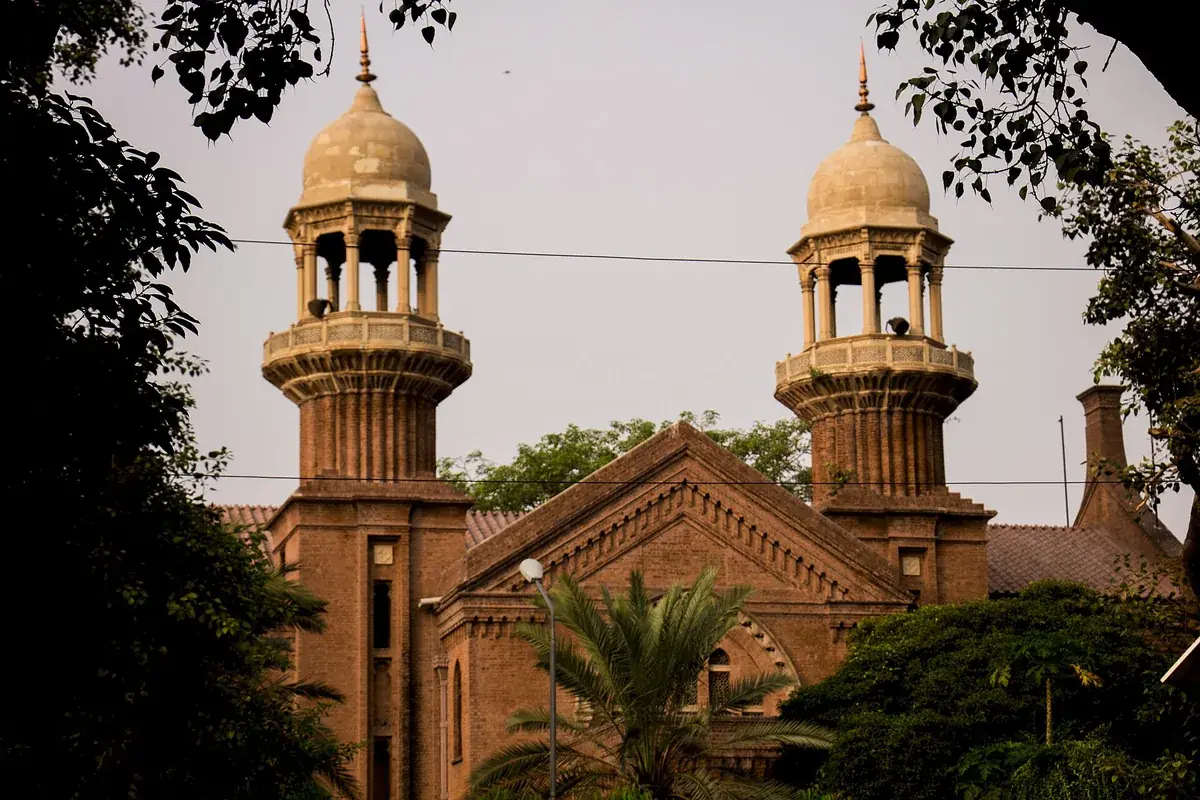
- Photo: MariyamAftab, CC BY-SA 4.0, via Wikimedia Commons
- Photo: succo, CC0, via Wikimedia Commons (originally Pixabay)


